
16 Apr The influencers with millions of followers who don’t actually exist
They have lucrative brand deals and strong political opinions. They’re also not real. Behind the scenes, a handful of tech companies are rewriting the rules of global culture
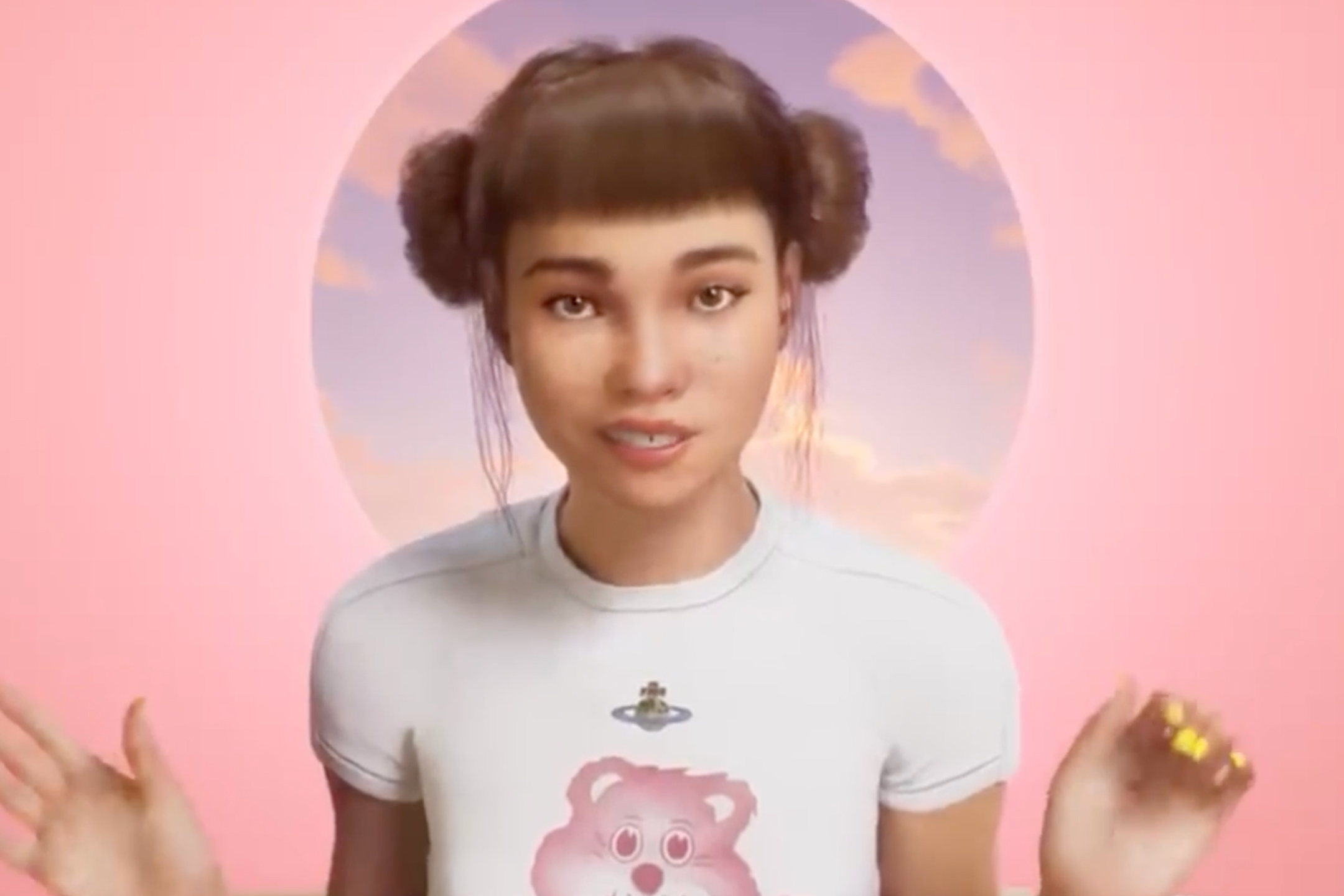
Lil Miquela has 2.5 million Instagram followers, a high-fashion wardrobe and a clear political voice. She has advocated for Black Lives Matter and the LGBTQI+ community, fronted major brand campaigns and built a devoted global fanbase.
She also has no pulse.
What exactly is a virtual influencer?
Virtual influencers are computer-generated characters (built using AI, animation and careful brand strategy) who operate on social media platforms exactly as human influencers do.
They post, collaborate with brands, respond to followers and take political stances.
Unlike human influencers, they never have an off day. They never say something unscripted. They are, by design, perfectly controllable.
That controllability is not incidental. It is the point.
Digital platforms like Instagram and Douyin (the Chinese counterpart to TikTok) are governed by algorithms that reward consistent, high-performing content.
Virtual influencers are engineered specifically to satisfy those algorithms, producing a constant, optimised stream of engagement.
The algorithms running these platforms are not neutral systems. They are active shapers of decision-making, worldviews and lifestyles, and they embed the economic imperatives of digital capitalism into our daily lives.
The result is that algorithms don’t just reflect culture. They decide which cultural ideas are allowed to spread globally.

A new kind of globalisation
My research points to a new wave of global cultural integration, something called ‘re-globalisation’ – which is the tension between global reach and local identity.
Re-globalisation is distinct from the economic globalisation of the late 20th century. It’s powered by digital platforms rather than trade agreements or geopolitics.
Where previous waves of globalisation spread ideas through media, trade and migration, this new version is mediated by platform logic: the rules, incentives and filters built into social media platforms that determine what content spreads and what disappears.
Because virtual influencers are owned by corporations, the worldviews and values they promote are carefully managed for commercial appeal.
This amounts to a kind of ideological curation at global scale, a colonisation of everyday life where human experience is increasingly replaced by corporate-designed simulations.
The contrast between Lil Miquela and Liu Yexi is instructive.
Lil Miquela embodies a Western-centric aesthetic: sleek, cosmopolitan and faintly unsettling in her near-human appearance. Liu Yexi draws on traditional Chinese cultural imagery. On the surface, they seem to represent very different visions of global identity.
But look closer and the differences dissolve.
Both are owned by corporations. Both are optimised for algorithmic engagement. Despite their surface differences, they serve the same system.
This convergence matters because re-globalisation, despite its apparent cultural diversity, may reinforce global inequalities.

Cultural and economic power is concentrated in the hands of a small number of transnational tech companies, while the appearance of local identity is carefully managed from above.
Engineered authenticity
Perhaps the most uncomfortable question in all of this is about belief.
Virtual influencers are increasingly used for what the industry calls ‘brand activism’ – that is, voicing support for social movements, political causes and cultural values.
Lil Miquela, for instance, posted in support of Black Lives Matter.
But when an algorithm promotes a virtual influencer’s political stance because doing so is commercially profitable, popular discourse is actually being shaped by commercial logic, not genuine human conviction.
Followers often form deep emotional bonds with virtual influencers.
These are the same one-sided connections people develop with celebrities or fictional characters, and they form without the follower necessarily realising the ‘person’ they feel connected to was designed in a boardroom to maximise engagement.
This is not just a matter of consumer awareness.
If the culture being reshaped by re-globalisation is built on predictive patterns and engineered emotion rather than genuine human exchange, the stakes extend well beyond marketing.
Virtual influencers are early indicators of a much deeper structural shift, one already reshaping how power, culture and identity work in a connected world.
The technology driving this will only become more sophisticated.
Right now, those decisions are largely being made by a handful of tech companies.
Every time an algorithm decides what content reaches millions of people, it is also deciding what ideas, values and worldviews get to travel.
That is an enormous amount of cultural power, and it sits almost entirely outside public scrutiny.
Lil Miquela has been telling us that for years. We just thought she was selling handbags.
Dr Tommaso Durante, Lecturer, Media and Communication University of Melbourne