18 Jun Adopted from India: How Writing My Story Helped Me Belong
Abandoned as a child in India and later adopted by an Australian family, Madhu Rollings shares how writing down his memories helped him understand his past — and feel he belonged to two places.
Making sense of my story
I’m Madhu, and this is my story. I don’t have a written history because I wasn’t born in a hospital. I was born in a little village by a river, on a blanket in the hut that my family had built. I don’t have a birth certificate or baby photos, and nobody knows how big I was.
When my father left me and my baby brother, Sadan, at a railway station, I was about eight years old, so I remember everything I went through. I felt very sad when I thought about how he abandoned us, and I used to cry a lot. It was very hard for me to look after my baby brother.
When my brother and I were taken to an orphanage, I didn’t have anyone to help me make sense of my experiences and memories. I worried about what my future would be. I decided to try to forget about my past. It worked for a while because I had friends to play with, but then something would remind me and I would feel sad again.
When Sadan and I were adopted by our Aussie family, I was scared about going with them because I thought they would leave us, the way our other parents did. The people in the orphanage didn’t really explain who these people were; they just said this was our new family.
Learning a new life
My life had to change again when I moved to Australia. I had to learn English and go to school. When I didn’t understand English, I used to think people were saying horrible things about me, about what a bad kid I was.
I was scared because everyone was a different colour from me and I hadn’t seen really white people before. I’d never used a toilet, or a bath or shower, and I’d never had enough to eat. Now I could get water by turning on a tap, and I could fill myself up when I was hungry.
After a while, I learned how to speak English. My mum thought that because I didn’t really understand everything that had happened to me, but had many memories, we should write a storybook. She thought it might help my life start making sense to me, help Sadan understand what had happened to us in India, and help my family understand more about me.
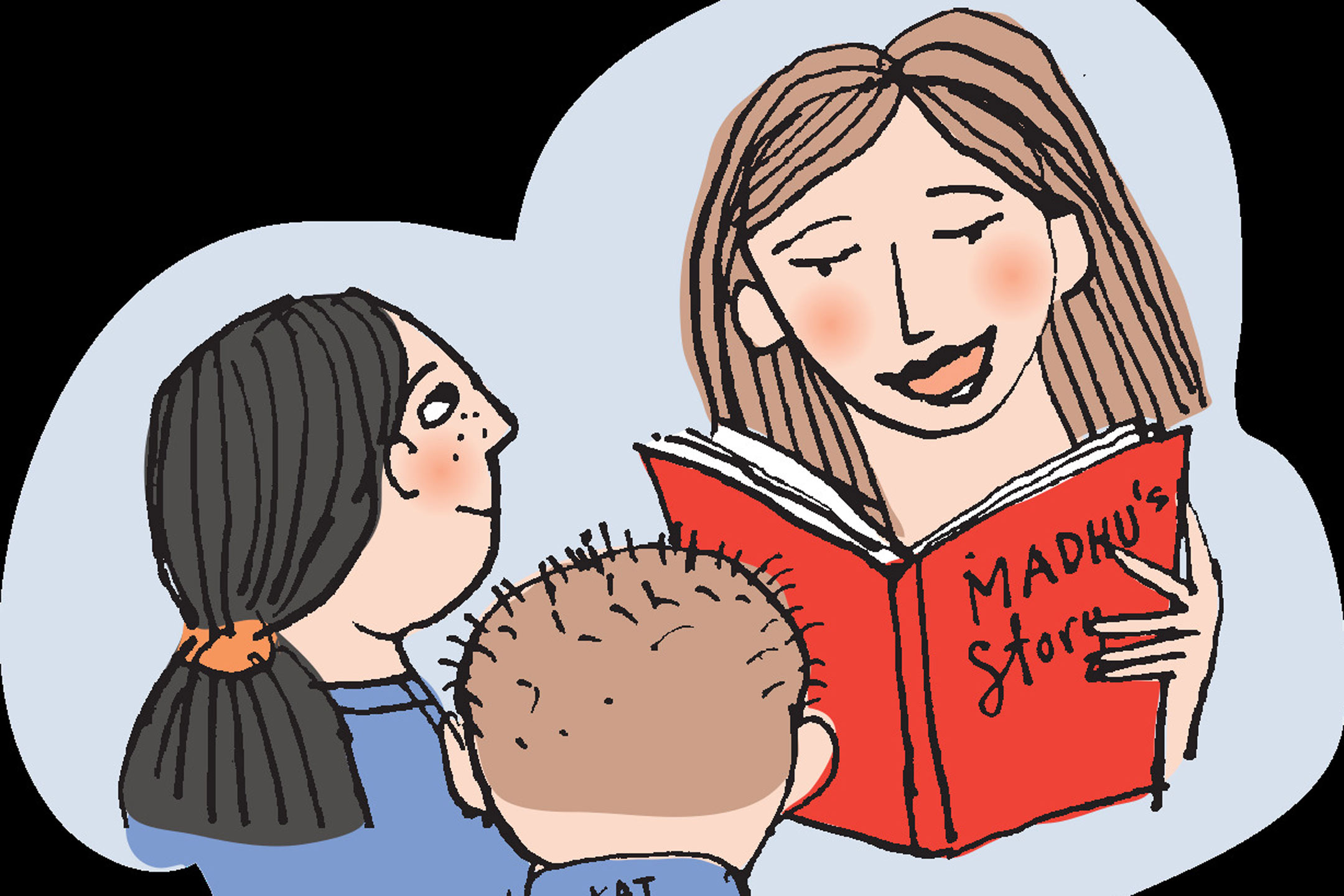
We used to sit at the computer and I would try to explain some of my memories, and Mum would write them down for me. Sometimes she didn’t really understand because I only had a bit of English and couldn’t think of the right words. Sometimes I got sad when we wrote about a difficult part. When we had written a page, I would draw a picture about that part of my story.
I wanted to take my book to school and show it to my teacher because I felt proud about my book and I wanted my teacher to know more about me.
Sharing my book
When we finished the book, people in my family wanted to read it. Mum asked me first, to see how I felt about other people reading my story.
I wanted to take my book to school and show it to my teacher because I felt proud about my book and I wanted my teacher to know more about me. After she read it, she asked me if she could read it to my class. I said that she could. The kids were good about it and nobody teased me. They asked me a lot of questions about my experiences.
My book helped me because I could think about my past without feeling sad each time. Since we wrote it, I have been able to start talking about my birth family without crying. Sometimes I get nervous talking to people about what happened to me, about being abandoned by my family in India, and everything else that happened there. My friends want to know about my life, but sometimes I don’t know how to tell them. I let them read my book and ask questions, and I try to explain so they understand me better.
 Returning to India
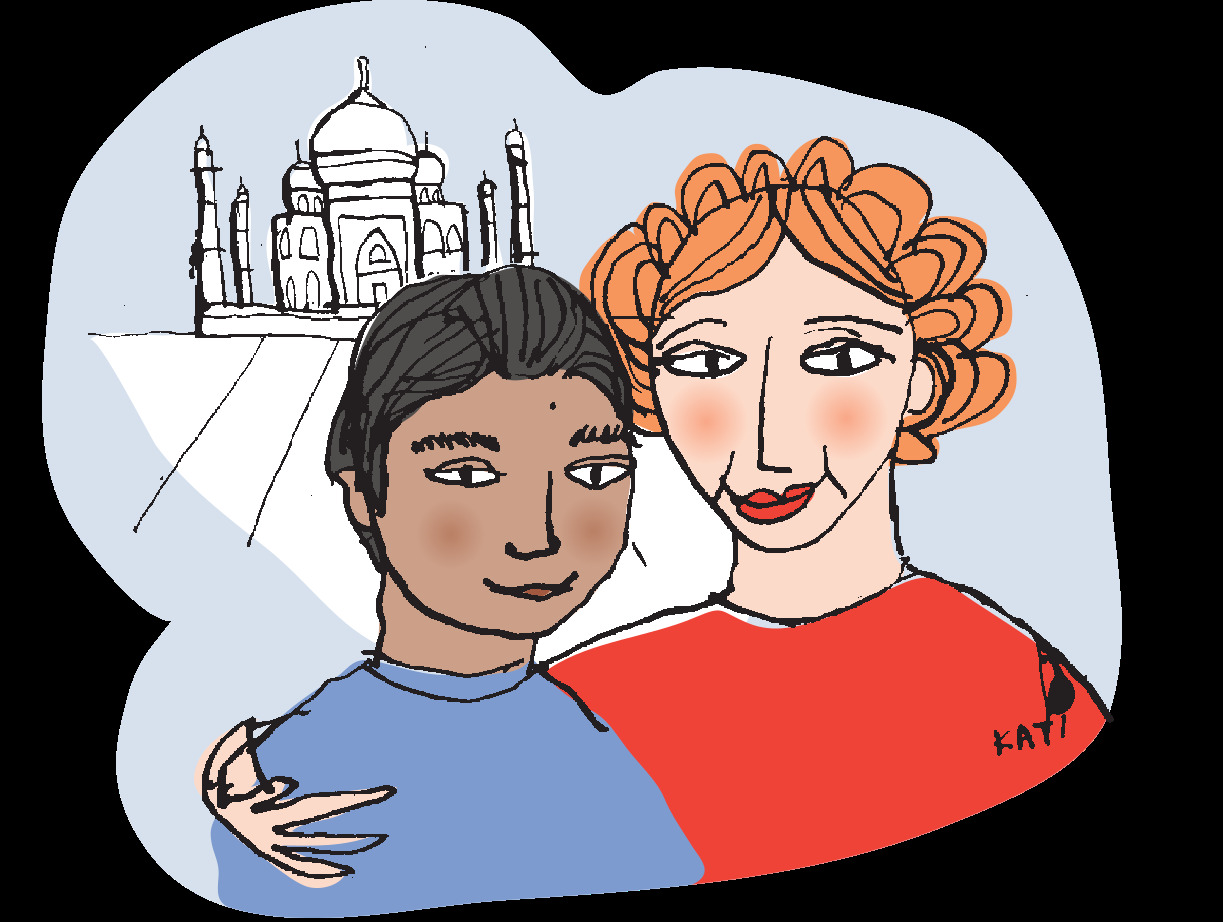
In November 2001, my mum and I spent a month touring my homeland. It was nearly seven years since I had left India and this was my first trip back.
Before we got to India, I imagined how it was going to feel and what reaction Indians would have when they saw me with my mum, a white woman.
I thought the kids in the orphanage would remember me — but what would they think of me? I didn’t think much about my birth family because I knew I wouldn’t find them or see them again.
India wasn’t the same as I remembered. It all looked new to me because I’m now used to my life in Australia. We travelled from Chennai in the south to Delhi in the north. We saw the Taj Mahal in Agra, the temples in Khajuraho, and went down the river Ganges in a boat in Varanasi.
I was really looking forward to going back to my orphanage and seeing the kids who had been there when I was there. When we arrived, things were different from how I had imagined. The carers I knew well weren’t there any longer, and neither were the children I had known. I was a bit disappointed, but still happy to see my orphanage and the few girls and carers who remembered me.
Everything seemed smaller than I remembered. There were lots of babies sitting and standing in cots. I was worried about them and how they were not looked after properly. There were only a few carers, and the babies looked sad and weak. I was sad that the children there wouldn’t get adopted.
Some parts of the trip were hard. People followed us and asked questions, trying to make us buy things. They pushed and shoved on trains and buses. Some transport was uncomfortable, and it was scary to look through the front windscreen at trucks and buses heading straight at us on single-lane roads.
But the trip changed the way I felt about India. I found out that things were different from how I remembered them, and India was not all bad. Some parts were bad and need to change, like the poverty and the pollution, but lots of things were great. I’m not disappointed that we didn’t find my village or more information about my birth family. What I care about is that we tried our best.
Belonging to two places
I don’t think of myself as being different from my white parents because I’m brown, or because I am Indian. I’m not ashamed or sad about my past. All I need to know is that my family loves me and cares for me.
I feel happy because I have friends and family who care about me. I have a very good education and am learning new things every day, so I will have many skills for life. I feel that I now belong to both Australia and India. I am pleased with how I turned out after all that happened to me, and there’s nothing I want to change about myself.
My future isn’t all planned yet. The only thing I am sure about is that I want to travel. I hope some day I will go back to India and see if it has changed. I haven’t decided yet what I want to be in life. Maybe I will just have to try many things before I find the right one for me.
Illustrations by Katherine Chadwick
Editor’s note:
While Madhu’s early memories are painful, his story is ultimately one of resilience, love and belonging — and the power of being helped to tell your own story.
This is an edited version of the chapter “Madhu’s Story”, by Madhu Rollings, from Adopting – Parents’ Stories, edited by Jane Turner Goldsmith, Wakefield Press, 2007.
At the time the original book was published, Madhu had graduated from college and begun full-time work as an apprentice air-conditioning and refrigeration technician. Later family updates indicate he went on to complete that apprenticeship.
For more information see InterCountry Adoptee Voices (ICAV). They advocate and educate from Lived Experience