
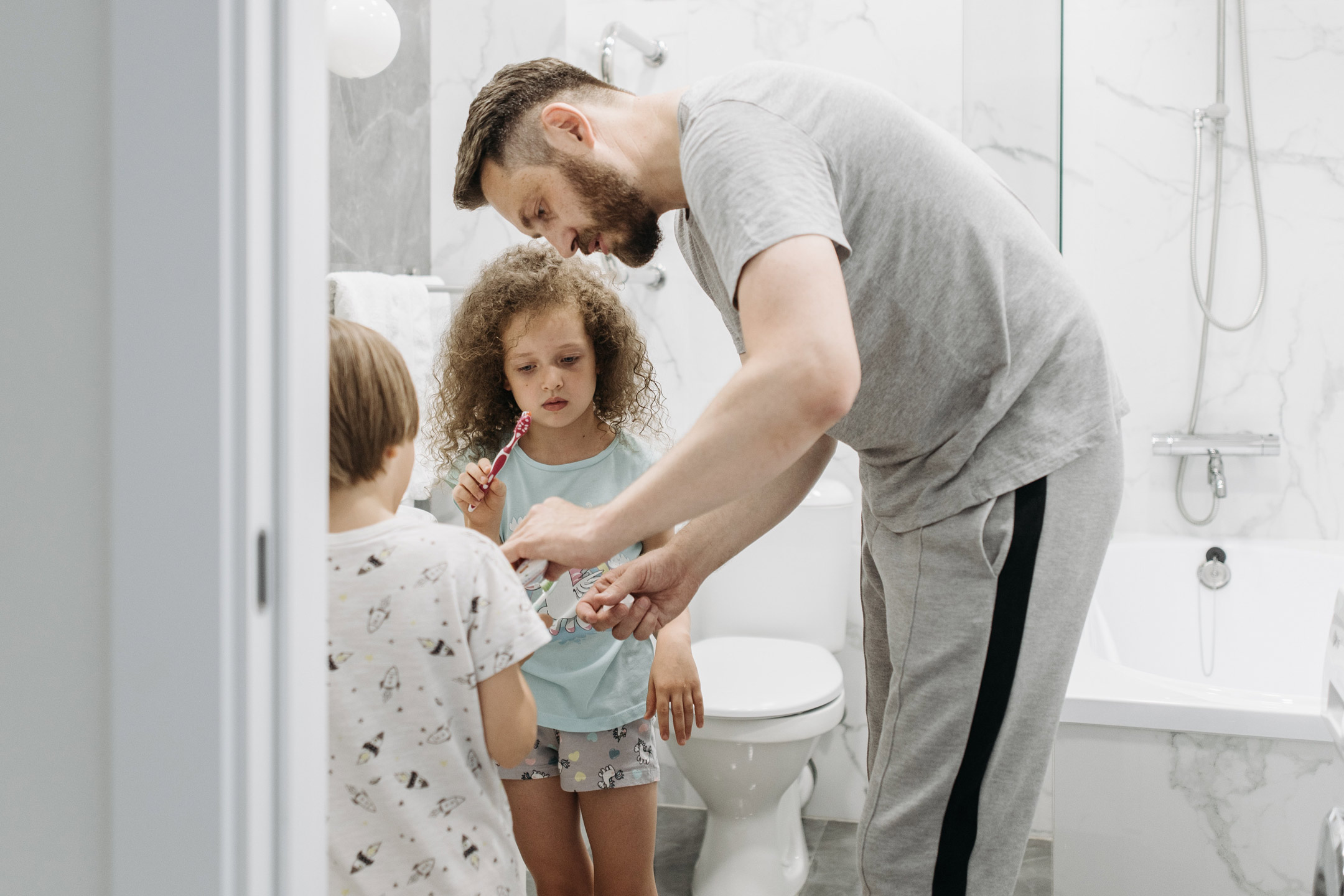
11 Jun How to Make Teeth brushing Easier for Kids
Teeth brushing can feel like one more daily battle for tired parents, especially when children wriggle, stall or clamp their mouths shut. But with the right approach, brushing can become calmer, quicker and more consistent — and help protect children’s teeth from early decay.
Why kids still need help brushing
Many parents step back too early and expect young children to brush properly on their own. A useful rule of thumb is that children usually need help until they have the hand skills to tie their own shoelaces.
Even once children start brushing independently, parents should still supervise, especially at night. The bedtime brush is the most important one because saliva flow slows down while children sleep. Saliva helps protect teeth, so any food or plaque left behind overnight has more time to contribute to tooth decay.
Children should brush twice a day — after breakfast and before bed. After the bedtime brush, it is best to stick to water only.
Toothpaste by age
Using the right toothpaste matters.
From birth to 18 months, babies usually only need their teeth and gums cleaned with water, unless a dentist advises otherwise.
From 18 months to five years, children can use a pea-sized amount of low-fluoride children’s toothpaste.
From six years of age, children can generally move to a pea-sized amount of standard fluoride toothpaste.
Children should be encouraged to spit out toothpaste rather than swallow it. A soft-bristled toothbrush with a small head is also best, as it is gentler and easier to move around a child’s mouth.
How to make brushing less of a battle
The goal is not perfection every time. It is consistency.
For younger children, try sitting them on your lap facing away from you, or gently resting their head in your lap so you can see their teeth clearly. For older children, brushing together in front of a mirror can help them learn what to do.
Playfulness can also help. Let children choose their toothbrush, use a song or timer, count their teeth, brush a favourite toy’s teeth first, or talk about “washing away the sugar bugs”.
Short instructions work best: “big open”, “tongue down” or “let’s count your teeth”. Praise also helps more than pressure. Simple comments such as “great opening” or “you stayed very still” tell children exactly what they did well.
When brushing is still difficult
Try not to turn brushing into a long argument. Even a brief brush is better than skipping it altogether.
But if toothbrushing is consistently hard, there may be another reason. Sensitive teeth, teething, mouth ulcers, a strong gag reflex or sensory sensitivities can all make brushing unpleasant. In that case, it is worth booking a dental check-up.
Children should also see a dentist by around 12 months of age, or when their first tooth appears. Early visits help children become familiar with the dentist and allow problems to be picked up before they become painful.
One final tip: avoid using the dentist as a threat. Saying things like “the dentist will pull your teeth out” can create fear. Children need to know the dentist is there to help them, not scare them.