
28 May Could Food Intolerance Be Affecting Your Child’s Behaviour? One Mum’s Story
When Kym Armytage’s son’s daily meltdowns didn’t ease with age, discipline or parenting books, she began to wonder what else might be going on. Her family’s experience led them to explore food intolerance — with professional help.
When the “terrible twos” don’t pass
My son has issues. Yes, issues. Isn’t that a wonderful expression? You can hear the inflection, can’t you? Isshhuuues.
We were expecting the terrible twos. In some strange way, we were almost ready for them. Tantrums in the supermarket? Bring it on. We had read the parenting books. We had done all this already with our daughter. We knew about distraction, time out and staying calm.
Trouble is, we were also expecting our son to grow out of them by three. No? Well, maybe by four. Four? Surely by four.
No? Hmmmmm. Isshhuuues.
Charlie is an adorable child. He has big brown eyes and is very sweet. He will cuddle me and say he loves me “all the way around the world and back again”. He is terrific on the computer, can negotiate the ABC Kids website with ease, and knows far more about dinosaurs than I do. He loves gym and playing in the park.
Then, at other times, he gets so angry that he will have a screaming meltdown that lasts an hour. During time out, he has, on many occasions, completely trashed his room, pulling toys and books off shelves and stripping the sheets and doona from his bed.
Usually, he falls asleep under his bed, entangled in the sheets he has just ripped off it. Later, we quietly help him clean up his room and talk about his frustration. He is full of remorse after these episodes, telling me how sorry he is and snuggling on my lap.
When discipline advice doesn’t help
Many people assume a child like Charlie simply needs firmer discipline. If only it were that simple.
If you haven’t lived with a child like this, it is very hard to comprehend. Well-meaning acquaintances, observing his energetic and boisterous nature, have asked me if I’ve had him tested for ADHD.
We knew this wasn’t the problem for Charlie, because he could concentrate on tasks and interacted well with his teachers and classmates at kindergarten. There, he was delightful.
At home, though, he could often be explosive and inflexible — unreasonable, demanding, and rough with his sister. This needed a lot of work if we wanted to maintain a close and loving relationship.
I had read so many parenting books that they competed for space on my bookshelf, rammed up against each other and cascading over two levels. I felt frustrated when the best advice they could offer was to “simply avoid taking your child to the supermarket”.
Right.
Sitting in the gutter crying in broad daylight, with two weepy children beside you, is a very humbling experience. I wish I could say it only happened once.
The school pick-up meltdown
Some of the most trying times involved collecting his sister from school. Often, Charlie just flatly refused to go.
One day, we had been having a lot of fun together. He had had my attention all day. I had given him plenty of warning that we would soon need to walk to school to get Alice. All of this was fine — until it was time to go.
He would not go.
I smiled. I cajoled. I talked about all the fun things we could look at on the way, such as ant nests and dandelions. He could take his favourite toy. It didn’t matter. Nothing worked.
I was getting desperate. The school bell was about to ring and my daughter would be looking for me outside her classroom. Charlie was adamant. There was no way I was making him go.
What can you do in that situation? The school bell doesn’t wait for a grumpy child.
I carried Charlie over my shoulder into the school grounds while he kicked, screamed and punched me in the back. I endured the horrified looks of other parents.
On the way home, I sat in the gutter and cried.
Some people may laugh at this — and my sister did when I phoned her about it — but it was one of the most mortifying moments of my life.
Sitting in the gutter crying in broad daylight, with two weepy children beside you, is a very humbling experience. I wish I could say it only happened once.
When every day feels like a minefield
If it didn’t happen very often, or last very long, I could probably deal with it. But my son usually had a meltdown every day. It often lasted for an hour and could be over things as small as setting the table or the colour of his plate.
Constantly negotiating such a minefield was draining. I was exhausted, yet had to stay mindful of where the next explosion might come from. If I kept it together, I might be able to ward it off before it escalated.
Hmmmmm. Isshhuuues.
 I am not by nature an eternally sunny and optimistic person. I found it difficult to remain calm and sensible when my son was being utterly unreasonable.
I wanted to yell at him to just do as he was told. I wanted to ask why he felt the need to fight with me over every little thing. I wondered why his sister had so readily understood these things and he seemed determined not to.
I agonised over how a child could be so totally adorable and so excruciatingly difficult in the same hour.
Could food intolerance be part of the picture?
We finally consulted a paediatrician, who agreed with us that Charlie did not have ADHD. However, as Charlie also had asthma and eczema, he suggested food intolerances could be worth investigating.
I studied the ceiling very carefully as I realised that we would have to try an elimination diet.
I had thought about this before, but had always dismissed it as being too hard. By now, though, the grim reality was that we were already in a situation that was too hard, so what did we have to lose?
I had also felt as if I was on the moral high ground in relation to our diet. Our kids simply didn’t eat a lot of rubbish. We had plenty of fresh fruit and vegetables, and I baked things for their lunchboxes rather than buying sticky muesli bars.
After reading up on food intolerances, though, I realised it was difficult to avoid food additives unless you knew what you were looking for. Many foods I thought of as everyday basics contained some form of colour, preservative or flavour — even bread, margarine, cheese, yoghurt, custard and plain rice crackers.
I also learnt that some children may react to naturally occurring food chemicals in certain foods, not just artificial additives.
Finding a way forward
After altering our diet for two months, we began seeing huge benefits.
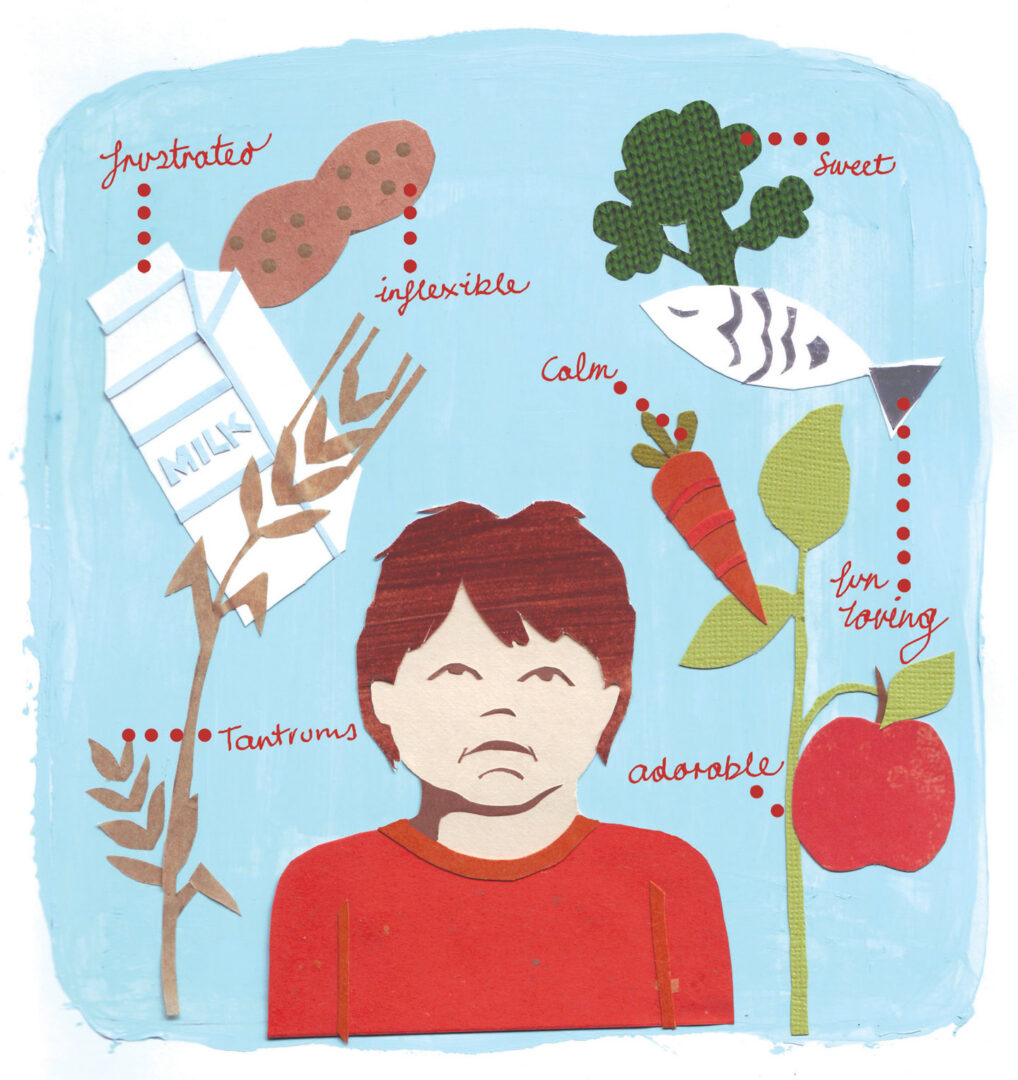
Charlie didn’t turn into an angel overnight, but there was a return of the sweet, fun-loving boy I used to see glimpses of. He could accept a change in routine, or a “no”, without a total meltdown. He was learning reason and compromise. He played nicely with his sister and had stopped trashing his room.
I had no idea certain natural foods, as well as food additives, could have such a dramatic impact on our child.
We still had a long way to go, but I finally felt as if we were on the right track.
What a relief.
Maybe I wasn’t such an incompetent mother after all.
Parent note: before trying an elimination diet
Food intolerance is different from food allergy. Food allergy involves the immune system and can sometimes cause serious reactions, while food intolerance can involve a range of reactions to foods or food chemicals and is not the same as an allergy. Healthdirect advises seeing a doctor if food allergy is suspected and notes it is important not to cut food groups from a diet without medical advice.
If you suspect food may be affecting your child’s health, behaviour or wellbeing, speak with your GP, paediatrician or an accredited practising dietitian before making major dietary changes. ASCIA advises that elimination diets should be temporary and undertaken under medical supervision.
The Royal Prince Alfred Hospital Allergy Unit continues to offer resources, including Friendly Food, a guide to managing common food allergies and intolerances.
- The Cookbook: The RPAH Allergy Unit published Friendly Food, an authoritative guide containing food charts, symptom management advice, and over 150 recipes free from common problem chemicals, gluten, dairy, eggs, nuts, and soy.
- Where to Purchase: You can buy the book directly from the Sydney Local Health District Books Page or through major retailers like Amazon Australia.
Useful starting points:
ASCIA food intolerance information
Healthdirect food allergy and food intolerance information
Food Intolerance Network/Fed Up as a parent support resource
Illustration: Andrea Smith