28 Jun New free app helps parents introduce allergy foods with more confidence
With one in 10 Australian babies developing food allergies, a new online tool aims to help parents and carers follow prevention advice in everyday family life.
Introducing solids can be exciting, messy and sometimes nerve-racking — especially when it comes to common allergy-causing foods such as egg, peanut, dairy and wheat.
For parent Emma Williams, that anxiety became very real when her baby son reacted to egg at around seven months of age. He had eczema as a baby, which is a known risk factor for food allergy, and later vomited after eating egg. Emma called an allergy helpline for advice, but the experience left her worried about what to offer next.
“When your baby’s had a reaction, you’re scared about introducing anything else,” she said.
It is a situation many parents will recognise. Food allergies now affect around one in 10 Australian babies, and while awareness of early allergy prevention has grown, many families are still unsure how to put the advice into practice safely and consistently.
Why early introduction matters
Research has shown that introducing common allergy-causing foods, such as peanut and well-cooked egg, soon after a baby has started eating solid foods can help reduce the chance of developing an allergy to those foods.
Updated ASCIA infant feeding guidelines for food allergy prevention reinforce this approach: once babies are ready for solids, common allergy-causing foods should be introduced in age-appropriate forms and, if tolerated, kept in the diet regularly — ideally at least once a week.
This regular exposure is important. Many parents assume offering a food once is enough, or they stop offering foods that are not commonly eaten in the household. Others delay introducing certain foods because they are worried about a reaction.
For babies with eczema, particularly moderate to severe eczema, the advice is especially important because they are at higher risk of developing food allergies.
 A practical tool for busy families
To help parents follow the advice at home, the National Allergy Council has launched the free online Food Follower App as part of its Nip allergies in the Bub program.
The National Allergy Council is a partnership between the Australasian Society of Clinical Immunology and Allergy and Allergy & Anaphylaxis Australia.
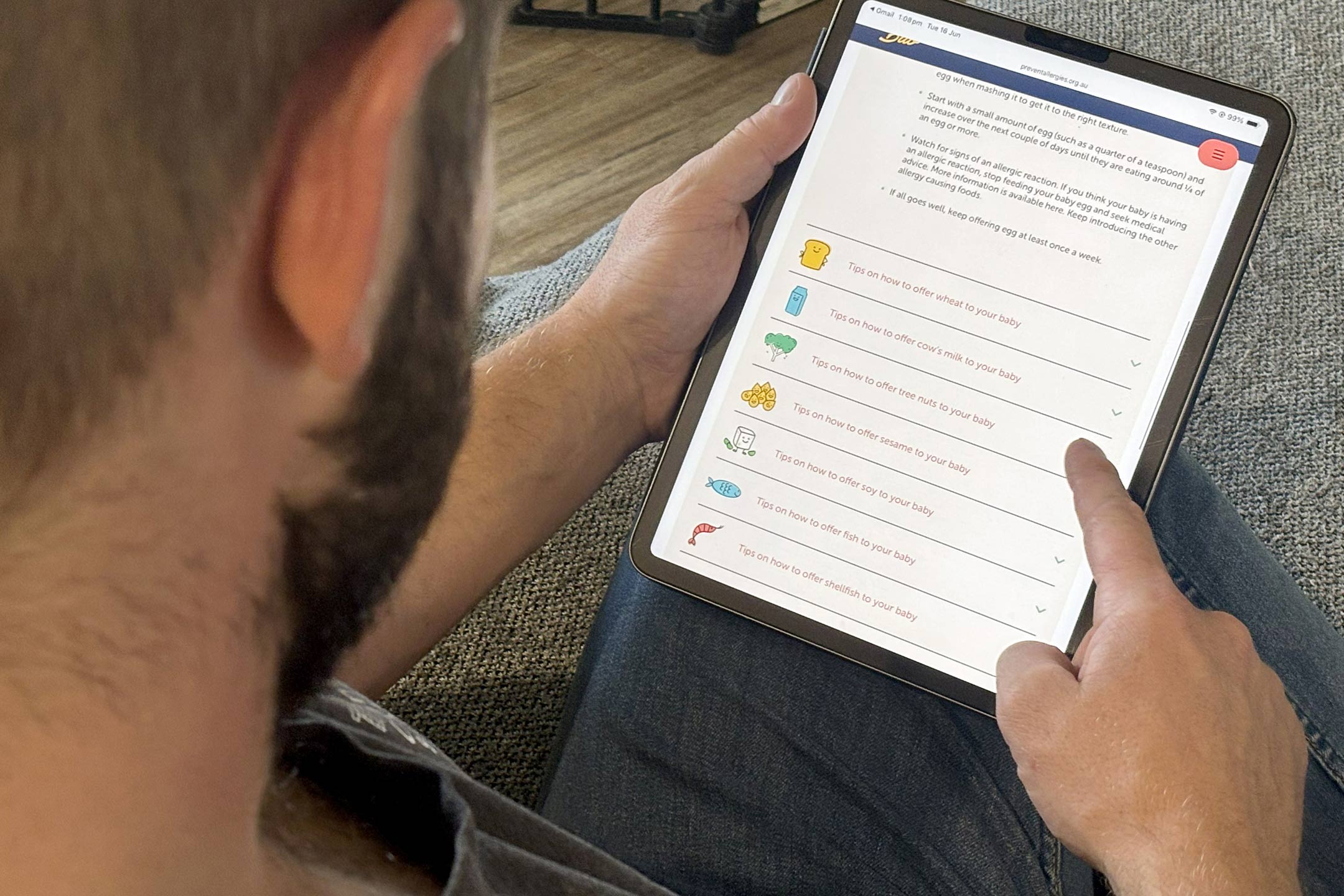
The Food Follower App is designed to help parents and carers keep track of which common allergy-causing foods have been introduced and remind them to keep offering tolerated foods regularly. It also provides links to practical food ideas and can be personalised according to a baby’s age and family eating habits.
Parents can log feeding progress, including any notes about possible reactions. The information can also be shared with partners, grandparents, carers and health professionals, which may help families stay consistent across different care settings.
Dr Sandra Vale, CEO of the National Allergy Council, said many parents understand that early introduction matters but are unsure what to do next.
“Parents are hearing that introducing these foods matters, but many are unsure of when and how to do this or what to do next,” Dr Vale said. “The Food Follower App turns that evidence into something practical, helping parents introduce the common allergy-causing foods and continue offering them regularly.”
It is not just about trying a food once
Dr Preeti Joshi, a paediatric clinical immunology and allergy specialist, said consistency is an important part of prevention advice.
“It is not just about offering a food once. To help reduce the risk of food allergy, these foods should be included around once a week, once they are tolerated,” Dr Joshi said. “That is where many families find it challenging, and where tools like this can help.”
For many families, the challenge is not only knowing what to introduce but remembering what has already been tried, what needs to be offered again, and how to manage feeding when a baby is cared for by more than one adult.
Maria Said AM, Director and Co-chair of the National Allergy Council and representative of Allergy & Anaphylaxis Australia, said the app helps reduce the mental load for parents.
“We know parents want to do the right thing, but introducing foods that many children are allergic to can feel stressful,” Ms Said said. “Having a simple way to keep track of the list of foods and reminders reduces the stress of keeping on top of what has been introduced, especially as life with babies and toddlers is often very busy and parents are sleep deprived.”
Emma said having feeding information in one place would be especially helpful when more than one person is caring for a child.
“When you’re introducing new foods, it’s important that everyone knows what’s been tried and what needs to be offered regularly,” she said. “Having that information in one place would make it much easier for parents, grandparents and other carers to stay on the same page and feel confident they’re following the latest advice.”
When to seek medical advice
Parents should seek medical advice if their baby has had a suspected allergic reaction, has severe eczema, or if they are worried about introducing common allergy-causing foods. Families should also follow any individual advice given by their GP, child health nurse, paediatrician or allergy specialist.
The online Food Follower App was developed after consultation with parents through focus groups and feedback from the Nip allergies in the Bub program, which reaches more than 160,000 parents and healthcare professionals each year.
It forms part of broader national efforts to reduce the burden of allergic disease, supported by funding from the Australian Government Department of Health, Disability and Ageing.
For more information, or to access the free online Food Follower App, visit preventallergies.org.au.