
27 Aug Puberty at Eight? What Parents Need to Know
When her eight-year-old daughter developed her first breast bud, Donna Reis wasn’t quite ready for the answer. She set out to find out more about early puberty – and discovered that children don’t always develop according to the timetable parents expect.
One evening my eight-year-old daughter gave me a fright when she pointed out a hard and tender lump under her left nipple. I didn’t tell her I was worried, but I vowed to take her to the doctor first thing the next morning.
Instead, I did what many anxious parents do: I went online.
The next morning, I arrived at the doctor’s surgery armed with my internet diagnosis.
“When will you turn nine?” the doctor asked, after examining my daughter’s chest.
“In four months,” she replied.
He turned to me and, without the slightest warning, announced, “It’s a breast bud. She’s starting puberty.”
Just like that.
I felt a strong urge to turn around and check whether some other mother had somehow snuck in with a 13-year-old in tow.
“But she’s still a baby!”
Apparently, though, it wasn’t terribly unusual to see the first signs of puberty at eight-and-a-half.
I took my little girl home holding her hand, feeling strangely sad about something I couldn’t quite explain.
How early is too early?
Puberty has a much wider timetable than many parents realise.
For girls, puberty usually begins between eight and 13, and breast development is commonly one of the first signs. For boys, the normal range generally begins from about nine.
Puberty beginning before eight in a girl or before nine in a boy is considered precocious puberty and should be medically assessed.
That meant my daughter’s breast bud, at eight-and-a-half, was early but still within the normal range.
And breast development doesn’t mean a first period is just around the corner. In girls, periods usually begin around two to three years after breast development starts.
Why does puberty start when it does?
There isn’t one simple reason.
Genetics plays an important role, while growth, nutrition, general health and body composition can also influence timing.
Research has found an association between higher body weight and earlier puberty in girls, although this doesn’t mean weight alone causes early puberty.
There is also evidence that some signs of puberty, particularly breast development in girls, are occurring earlier in many populations. Exactly why is still being studied.
One persistent myth is that hormones fed to chickens are responsible for children developing earlier. In Australia, hormones are not used to make chickens grow more quickly.
 Being different from your friends
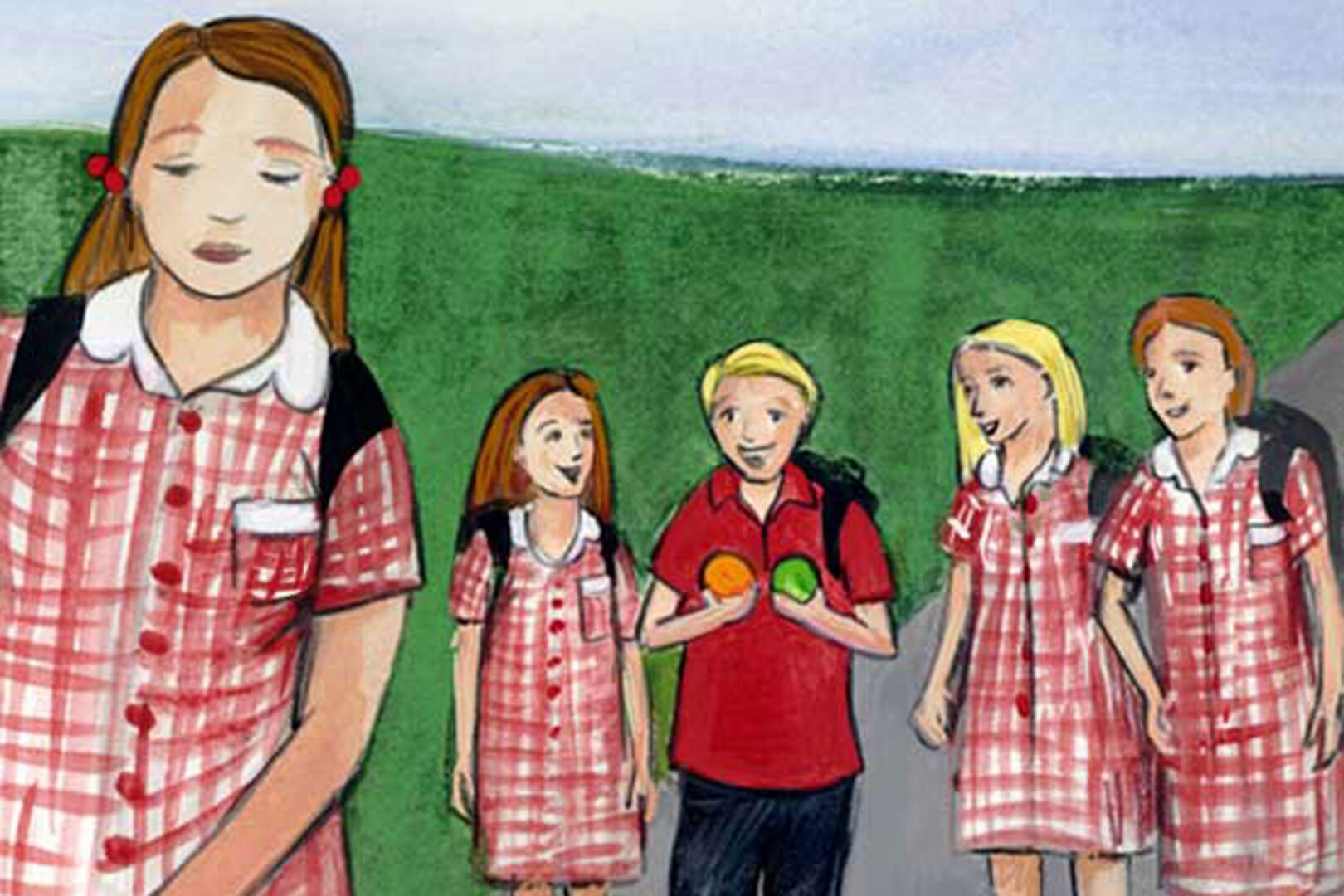
Whatever the cause, developing while friends are still noticeably prepubescent can be difficult.
Clinical psychologist and family therapist Andrew Fuller says children who look physically different from their peers can become more self-conscious or attract unwanted attention.
“The biggest disadvantages seem to occur for girls who develop early and boys who develop late,” he says.
There’s also a tendency for adults to expect more mature behaviour from children simply because they look older.
For girls in particular, breasts and periods may arrive while they still feel very much like children.
“There’s the apprehension for younger girls having to deal with periods and everything that’s associated with that, while their friends are still just being kids,” Fuller says.
Keep the conversation simple
Susanna Russo*, whose eight-year-old daughter was showing signs of development, remembers having her own first period at 10.
She recalls feeling isolated because none of her friends understood what she was going through.
“I’m very conscious of guiding my daughter through that experience,” she says.
For younger children, puberty conversations don’t have to involve one enormous, detailed “talk”.
Tell them simply and honestly what is happening to their body. Answer the questions they’re actually asking and reassure them that bodies develop at different times.
Practical preparation can help too. A child who may begin menstruating while still at primary school can be shown how period products work and keep a small supply in their school bag.
When should parents see a doctor?
If signs of puberty appear before age eight in a girl or before age nine in a boy, it’s worth seeing your GP. Medical advice should also be sought if changes are progressing unusually quickly or you’re concerned about your child’s growth or development.
Very early puberty can cause bones to mature sooner than usual. Children may initially have an early growth spurt but stop growing earlier, potentially affecting adult height. A GP may refer a child to a paediatric endocrinologist if further assessment is needed.
For children within the usual age range, however, an early breast bud or other first sign of puberty may simply mean their body has started its own timetable.
My daughter and I eventually had that chat.
She was surprisingly accepting and afterwards gave me a big hug.
Perhaps what I’d really had to adjust to wasn’t the idea that something was wrong with her, but the realisation that another stage of childhood had begun sooner than I’d expected.
And even when the slammed doors become more frequent and acne treatments start taking over the bathroom, I’ve realised that she will always be my little girl.
*Name has been changed. This article was originally published in 2008 and has been lightly edited and updated for the web.
Illustration by Rosalie Street
See also: Puberty is a critical time at school