
04 Jun Simple Ways to Create a Study Space That Works for Kids
Homework Without the Hassle: You don’t need a Pinterest-perfect study nook or a spare room to help kids stay organised with homework. A few practical systems — even in busy family homes — can make schoolwork feel far less stressful for everyone.
Homework can quickly become one of the biggest pressure points in family life. One child is searching for a missing worksheet, another insists they “have it under control”, and suddenly it’s 9pm and a project due tomorrow still hasn’t been started.
But often, the problem isn’t laziness or lack of motivation. Many kids simply don’t yet have the organisational skills needed to manage schoolwork independently — especially when they’re juggling assignments, devices, extracurricular activities and busy family homes.
And despite what social media might suggest, children don’t need a designer study nook or their own bedroom desk to succeed.
Many Australian families don’t have the luxury of separate study rooms or quiet bedrooms — and that’s completely normal. A consistent routine and a workable system often matter more than having the “perfect” setup.
Create a “home” for schoolwork
One of the simplest ways to reduce homework stress is to create a dedicated place where all school-related items live.
This could be:
- a small desk
- a shelf or drawer
- magazine holders for subjects
- a rolling cart
- a plastic crate or tub that can be packed away after homework time.
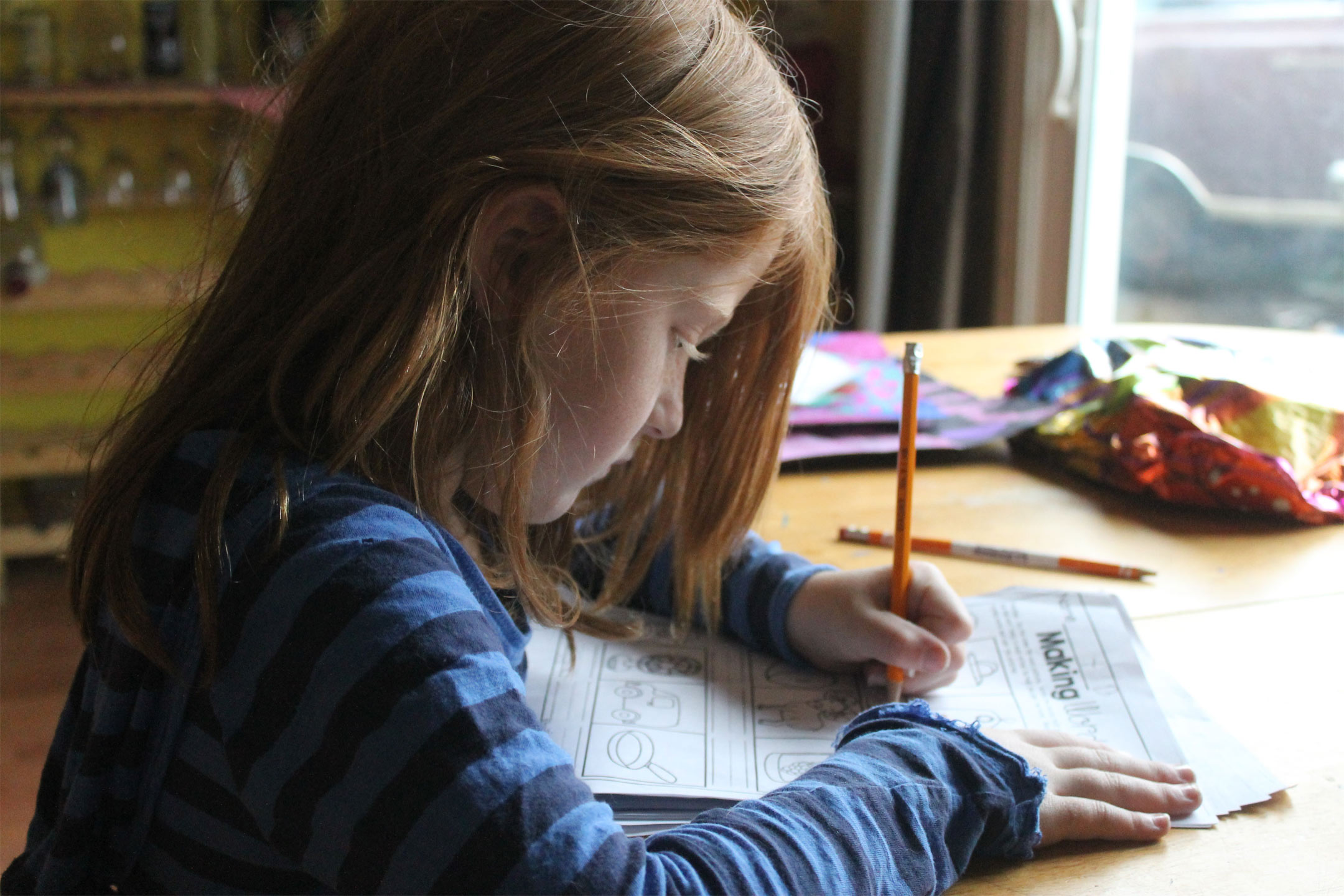
Portable systems work particularly well for families sharing spaces. A child working at the dining table can keep supplies in a basket or caddy and simply pack everything away afterwards.
The important part is consistency. When worksheets, books and notes always go back to the same place, there’s far less chance of lost permission slips, missing library books or late-night panic.
Different kids work differently
Not every child studies best in silence.
Some children concentrate better at the kitchen table while family life buzzes around them. Others need complete quiet away from siblings and distractions.
It’s perfectly okay to have flexible study spots depending on the time of day or what’s happening at home. A child might use the dining table after school, then move to a quieter bedroom corner later in the evening.
If younger siblings are noisy after school, it can also help to create a short “quiet window” in the house or shift homework slightly later when the home settles down.
Good lighting and a comfortable chair help, but the “perfect” setup matters less than whether your child can focus there.
Watch for signs they may need help
Parents often notice something is “off” before children admit they’re struggling.
Some common signs include:
- leaving assignments until the night before
- regularly missing deadlines
- piles of loose papers and notes
- not knowing what homework is due
- feeling overwhelmed or anxious
- getting distracted easily
- confusion about the difference between homework and study or revision.
Sometimes children who seem disorganised are actually feeling embarrassed, stressed or unsure where to begin.
For some children — particularly those with ADHD or learning difficulties — organising schoolwork can feel genuinely overwhelming, not simply messy or careless.
A calm conversation usually works better than constant reminders or “nagging”.
Make it easier to get started
Getting started is often the hardest part of homework.
Keeping basic supplies nearby — pens, pencils, chargers, rulers, erasers and paper — removes one more excuse to avoid work. It also prevents those frustrating late-night searches for a missing glue stick or calculator.
Planning tools can help too, but they need to suit the child. Some kids love digital reminders while others prefer a simple wall calendar or notebook checklist.
It can also help to encourage children to spend two minutes resetting their space after homework — sharpening pencils, charging devices and returning papers to folders before packing everything away.
Quick homework-space checklist
-
A regular place to work
-
Supplies within reach
-
Somewhere to store papers
-
Minimal distractions
-
A visible planner or calendar
-
A simple pack-away system for shared spaces
Homework may never become a child’s favourite part of the day, but a calmer, more organised setup can make it feel far less overwhelming — for kids and parents alike.