02 Jul Why Time With Grandparents Matters So Much
Grandparents often have something young families are short of: time. Dr Gill Pennington reflects on how stories, routines, memories and everyday moments help build lasting bonds between grandparents and grandchildren.
The gift of one more story
“Is there time for just one more story before I go to sleep?” a little voice asks.
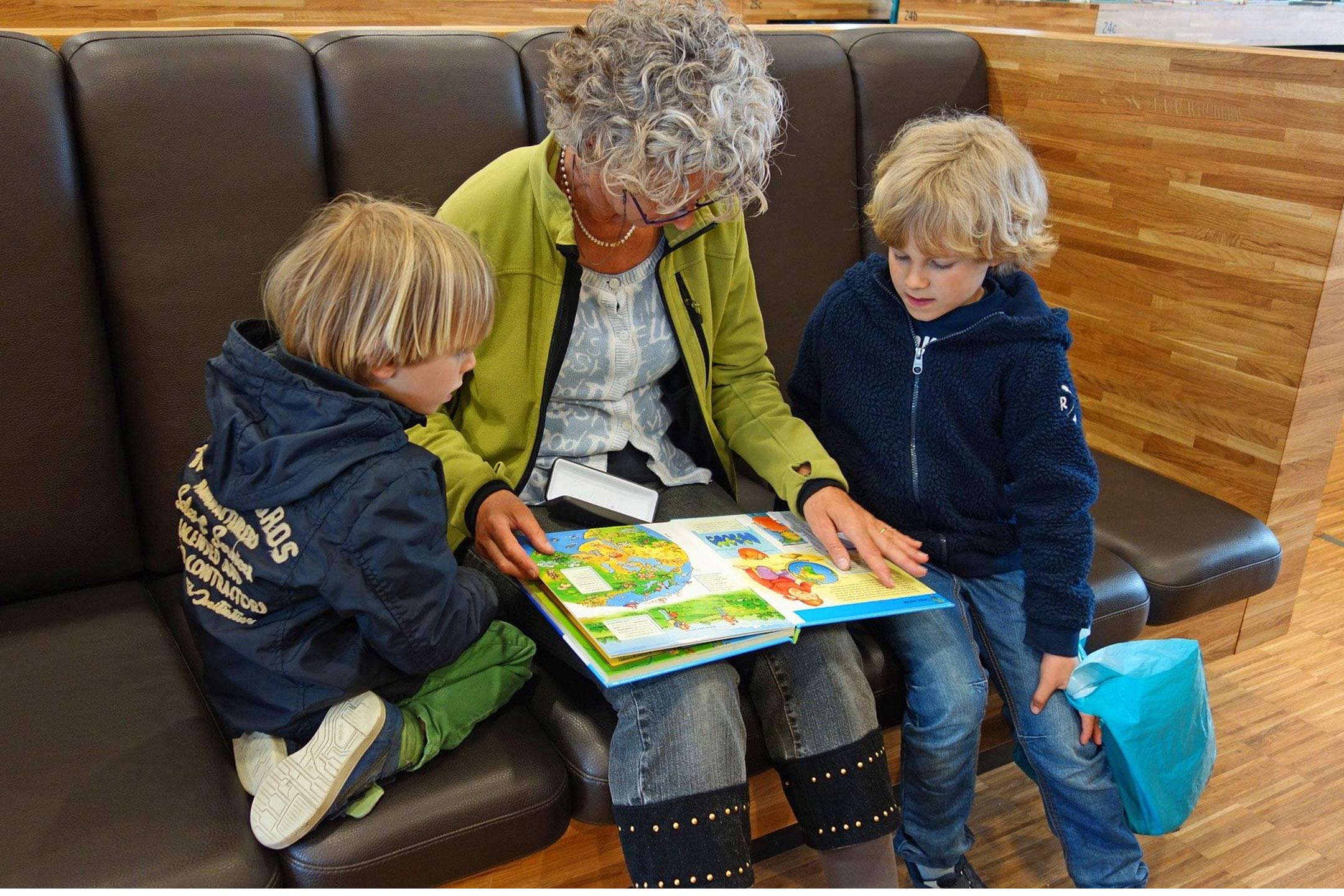
Yes, of course there is. I’m a soft touch for a bedtime story; it’s part of my job description as a grandmother. And, unlike my grandson’s busy parents, I now have plenty of time to share with him: time to linger over every page, answer questions, laugh at the jokes and listen to his ideas.
Time, it seems to me, is central to grandparenting. Not just time passing, though this matters as both grandparents and grandchildren grow older, but also the time available for shared activities and experiences. There is also the notion of time over again, in the form of memories and second chances.
In preparation for a book on grandparenting, I’ve been having conversations with grandparents, mostly in their 60s and 70s, and a few grandchildren, mostly in their 20s and 30s. I’ve also spoken with some “grand-friends”, remembering that some intergenerational relationships grow outside the family. Their observations help illustrate the ways time plays out in relationships forged across generations.
Watching children grow
“Hasn’t she grown!” was a comment guaranteed to infuriate me as a youngster on annual visits to extended family.
But the passing of time, shown by a baby’s newfound ability to sit, stand or stagger across the room, is usually cause for delight.
“I’m in love with watching him crawl or smile!” one new grandmother tells me.
As the years go by, the change from cute toddler to awkward teenager is also marked by academic, sporting and cultural achievements, many of which are observed and celebrated by grandparents.
“Nanna would always come to my dance performances as I was growing up,” says one granddaughter.
And Nanna may well have watched the latest concert while thinking fondly about earlier, less accomplished performances. It’s a special grandparenting privilege that allows us to know, and love, many versions of our grandchildren simultaneously across time.
When grandparents grow older too
The march of years is not usually treated so enthusiastically when applied to grandparents themselves.
While many of us welcome the increased time at our disposal, we don’t relish having to spend it in specialists’ waiting rooms. Grandchildren are a great distraction, but can our energy levels keep up?
One grandmother describes visits from her daughter’s young children as a kind of whirlwind.
“I love every minute of their company but by the time they leave I only just have the strength to pour myself a glass of wine!”
Another grandmother describes the joy of their welcome, “but then they ask you to sit on the floor and you think, how am I going to get up?”
The changes are not lost on older grandchildren. My conversations reveal an increasing sense of responsibility towards those who cared for them in the past.
“The role has changed now they are older – between me and my cousins we help them to attend doctors’ appointments or take them to the shops. I want to be there for them more as I remember all the things they did for me when I was younger.”
For migrants living in Australia, distance from the family home can make this harder.
“I always thought I’d be the one to look after her but then I couldn’t because I wasn’t there.”
The many ways grandparents give time
Shared time depends greatly on individual circumstances.
Some grandparents step in to become full-time carers, replacing absent parents for whatever reason. They make themselves available 24/7 and deserve the utmost respect.
Others would love to play a bigger part in their grandchildren’s lives but are unable to because they live on the other side of the world. Some live nearby but may find themselves excluded from concerts, parties and everyday milestones because family relationships have become strained.
Many grandparents help new parents return to work by providing regular childcare, arriving early and leaving late, and being on call when children are sick.
“I would go to her house… she had two single beds to make a king size, I would sleep on one side, her on the other.”
Later, grandparents may help with school drop-off and pick-up, and cover much of the school holidays.
“I grew up very close to my grandparents, they helped raise my sister and me whilst my parents were working.”
Some live nearby or with their grandchildren, becoming part of the daily rhythm of life.
“My grandson wrote in his News book at school, ‘I love my Gran because she takes us to the pub!’”
Making the most of ‘Granny Time’
The time available to us varies constantly.
At present, my grandchildren are young enough to want to share their time with me: long, slow walks home from preschool examining ants’ nests and rescuing bugs from puddles. But I know it won’t always be like that.
Hopefully, the contact will continue in the form of chats and phone calls. Grandparents can be very good at listening and can become willing conversational partners.
“She was a real sounding board for me,” one grandchild says.
Available time is not to be wasted. As one grandmother with family in Melbourne tells me, “I’m spending less time with the laundry down there because time is so short and precious… this is special ‘Granny Time’ and I do what they enjoy.”
A second chance to play and listen
Time doesn’t always move in a straight line.
Within grandparent-grandchild relationships, the notion of time over again frequently comes into play. Many people I spoke with described grandparenting as a second chance.
“I used to love playing make-believe with my kids and now I get to do it again.”
Another grandparent says, “I’m reliving my childhood through her by enabling her to go to ballet once a week.”
Others see grandparenting as a chance to improve on their earlier performance.
“I never gave my own children enough time when they were young, I was so busy.”
“I didn’t listen to them enough as a parent, now I’m making up for it.”
It can be enormously satisfying to repeat, and hopefully improve on, the roles we attempted as parents the first time around.
Why small routines matter
Repetition plays a big part in children’s learning, allowing them to gain confidence in a new activity or unfamiliar environment before tackling new skills.
Grandparents may be familiar with their grandchildren’s love of routine when they come to visit, as they head straight to the same box of toys or ask to play the same card games time and time again.
“Even on the walk home from creche there’s a routine about counting the house numbers.”
I think these rituals serve an additional purpose.
By repeating regular experiences with our grandchildren, we encourage a reassuring sense of predictability and certainty. We allow them to build feelings of trust, and to rely on us to have their best interests at heart.
Grandparents are often the first significant adults a child connects with outside the immediate family. Regular enjoyable routines created together can help lay foundations that, over time, sustain future enduring relationships.
A priceless collection of moments
And so my grandson and I eke out a little more time over the bedtime storybook.
We read for just long enough to create another shared experience, another memory to be added to the unique and priceless collection that represents a myriad of past moments in our time together.