
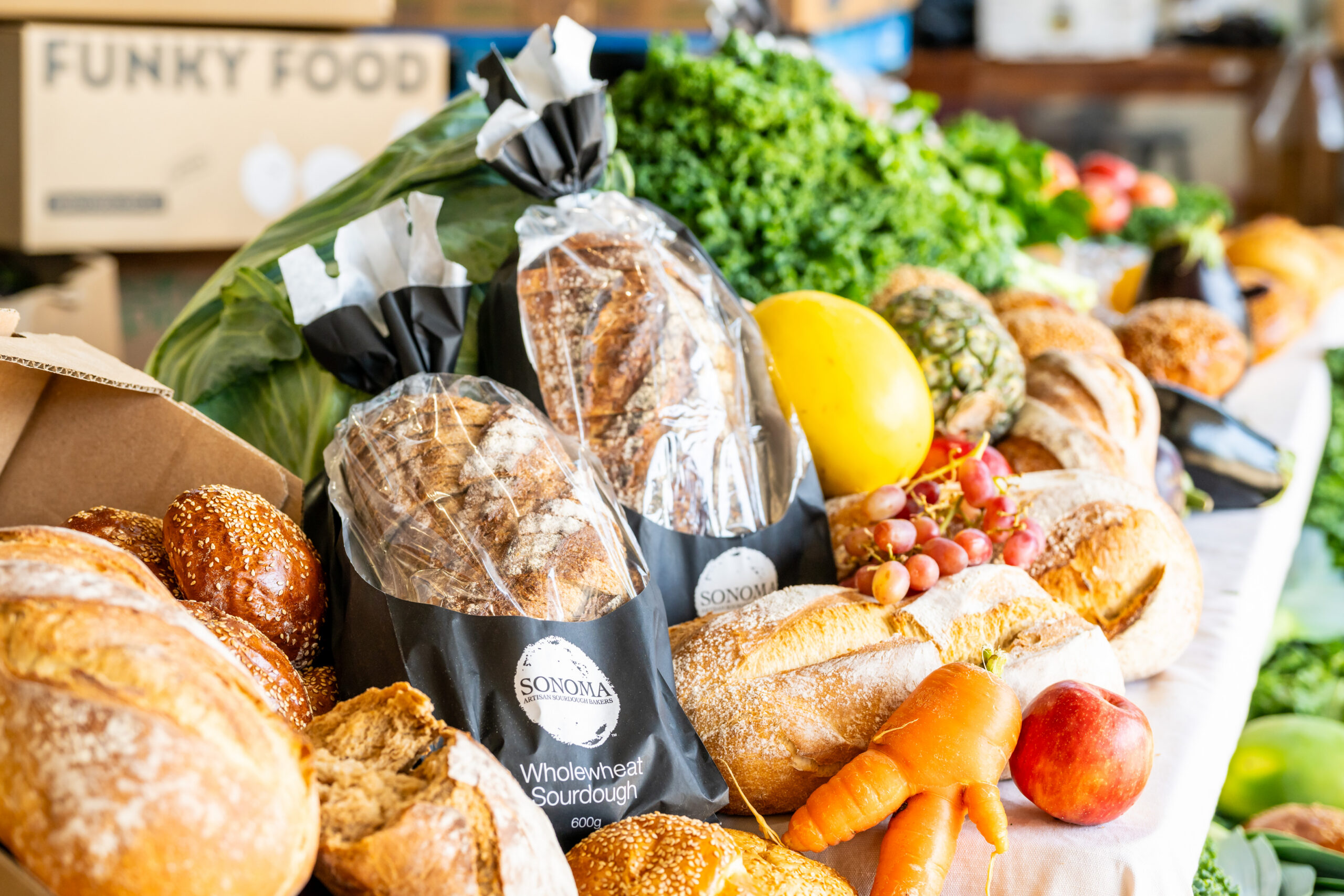
01 Nov Would you buy a wonky carrot? Imperfect food goes mainstream
Crooked carrots, undersized apples and oddly shaped vegetables are no longer confined to farmers’ markets and food rescue boxes. Imperfect produce is becoming easier to find — and for families watching the grocery bill, it may be worth a second look.
For years, shoppers have been used to fruit and vegetables that look remarkably uniform. Apples are a similar size, carrots are straight and supermarket tomatoes generally look much like the tomato sitting beside them.
But perfectly good food doesn’t always grow that way.
An increasing number of supermarkets and food delivery businesses are selling produce that might once have been rejected because it is too large, too small, unusually shaped, slightly marked or simply in excess supply.
And with food prices still rising, there is another reason families may be taking notice.
Australian Bureau of Statistics figures show food and non-alcoholic beverage prices rose 3.2 per cent in the year to July 2026.
Canstar research earlier this year also found 80 per cent of Australians surveyed had changed the way they grocery shop to save money, including buying specials, switching brands and shopping across several supermarkets.
What exactly is ‘imperfect’ food?
Usually, there is nothing wrong with the food itself.
It might be a forked carrot, an apple that is smaller than usual or a capsicum with an unusual shape. Sometimes produce is simply plentiful and growers need another market for it.
Woolworths’ The Odd Bunch has been selling less cosmetically perfect fruit and vegetables since 2015. The supermarket says more than 115,000 tonnes have been sold through the range.
Coles also sells selected fruit and vegetables under its I’m Perfect range, including products such as apples and mandarins.
That means families don’t necessarily need to order a special produce box to try buying imperfect food — it may already be sitting in their regular supermarket.
From wonky vegetables to the weekly grocery shop
There are also businesses built specifically around produce that supermarkets might otherwise reject.
Farmers Pick, for example, delivers seasonal imperfect fruit and vegetables and says its produce can cost up to 30 per cent less than supermarket equivalents. Its range has expanded well beyond vegetables to include meat, seafood, dairy, bread, pantry goods and snacks.
Funky Food operates on a similar idea. Customers can choose fruit and vegetable boxes and add groceries including meat and pantry products, with weekly or fortnightly delivery.
Meanwhile, Sydney-based Good & Fugly, a joint venture involving OzHarvest Ventures and chef Matt Moran, focuses largely on rescued and cosmetically imperfect fruit and vegetables.
So what began as the occasional box of funny-looking vegetables is starting to resemble an alternative way of doing at least part of the weekly grocery shop.
Does imperfect food really save money?
It can — but it is worth checking.
Both Funky Food and Farmers Pick advertise savings of up to 30 per cent on some produce.
But “imperfect” doesn’t automatically mean “cheapest”.
Compare the price per kilogram, delivery fees and minimum order requirements. Produce boxes can also contain more food than a small household needs, so the bargain disappears if half the vegetables end up in the bin.
The best saving is food your family will actually eat.
A different way to look at food
There is also a useful lesson here for children.
Carrots aren’t meant to be perfectly straight, apples don’t have to be identical and a blemish on a vegetable doesn’t necessarily mean there is anything wrong with it.
Buying imperfect produce can help children see what food actually looks like when it comes from farms rather than expecting every piece to fit an ideal shape.
And if that funny-looking carrot happens to cost a little less as well, families may have another reason to put it in the trolley.
Main Image : Funky Food
Also see Food Waste topics: