

11 Mar TikTok, Roblox and AI: Where Australian Kids Are Spending Their Screen Time
New global research shows Australian children were spending more than two hours a day on TikTok before the under-16 social media ban. But that’s only part of the story — gaming platforms, messaging apps and AI tools are quickly filling the gap.
TikTok dominated children’s screen time
Before Australia’s social media ban for under-16s took effect, local children were spending more time on TikTok than kids in any other country studied.
The new “Lost in the Scroll” report from online safety company Qustodio found Australian children averaged 132 minutes per day on TikTok in 2025 — up from 75 minutes a day in 2021.
That means many children were spending more than two hours a day scrolling the platform.
Instagram ranked second among social platforms, with Australian kids spending an average of 72 minutes per day on the app.
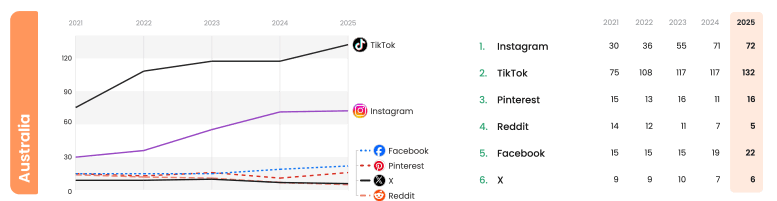 Social media usage by Australian children
The report analysed anonymised data from more than 400,000 family homes across six countries, alongside insights from over 1,300 parents about their concerns around children’s digital habits.
Online safety expert Yasmin London from Qoria, Qustodio’s parent company, says the new social media restrictions may not reduce screen time — but instead shift where children spend it.
“We’re already seeing a ‘how-to’ culture emerging online where young people share tips about getting around the ban,” London says.
Gaming platforms may fill the social media gap
While TikTok dominated social media, Australian children were also spending significant time gaming — particularly on Roblox.
Australian kids logged the highest Roblox usage of any country studied, averaging:
-
87 minutes per day on mobile
-
133 minutes per day on desktop
Roblox allows players to create and share their own games, which can be highly engaging but also raises safety concerns because much of the content is user-generated.
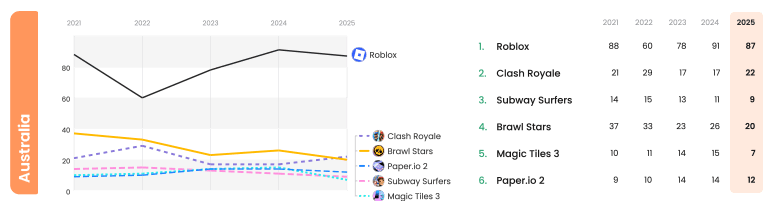 Roblox usage comparison
London warns many families monitor mobile devices closely but overlook shared devices like family computers or smart TVs.
“Shared devices often slip under the radar,” she says. “But that’s where children can access platforms that include chat functions or user-generated content.”
Even though Roblox includes restrictions on chat features for children’s accounts, experts say these can sometimes be bypassed.
The report also found Roblox, Minecraft and Fortnite were the three most commonly blocked gaming platforms on family computers.
Messaging apps remain hugely popular
Outside of gaming and social media, children are also spending time on messaging platforms.
The report found that Snapchat was the most widely used communication app among Australian children, with an average daily use of 63 minutes.
Discord, which is not covered by Australia’s social media ban, was the second most popular, averaging 24 minutes per day.
Experts expect messaging apps like Discord, WhatsApp and Steam chat could become even more popular as children look for new ways to communicate online.
AI tools are the fastest-growing platforms
Another major shift in children’s digital habits is the rapid growth of artificial intelligence tools.
In 2025:
-
46% of children visited ChatGPT, up from 24% in 2024
-
23% used the ChatGPT app, compared with just 4% the year before
-
Average usage reached 11 minutes per day
 Growth in AI tool usage
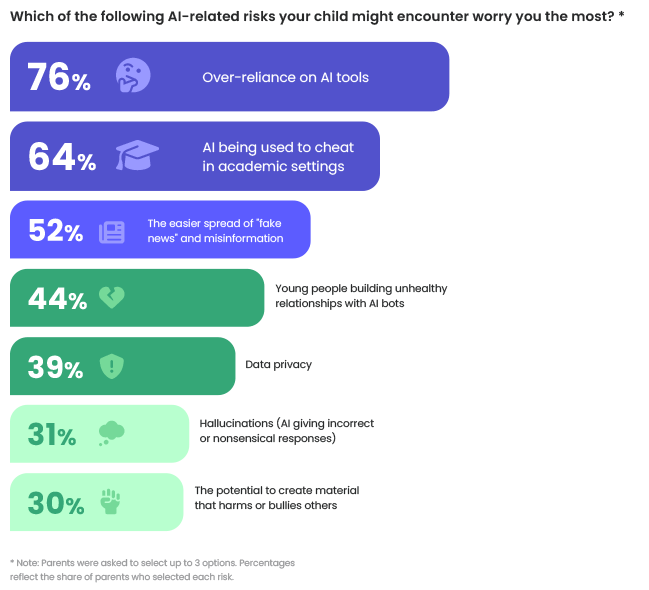
Many children are using AI to help with homework, creative projects, or everyday questions, but some are also turning to chatbots for conversation or emotional support.
Specialised AI companion bots are also beginning to appear in children’s digital lives. While still relatively niche, the time spent on them can be significant.
Among Australian children:
-
Polybuzz users averaged 47 minutes per day
-
Character AI users averaged 52 minutes per day
-
Talkie AI users averaged 60 minutes per day
What parents should watch for
As AI tools and online platforms become more embedded in children’s lives, experts say parents should stay alert to how kids are using them.
London suggests looking out for signs that AI tools or chatbots may be becoming too important in a child’s daily life.
These could include:
-
spending increasing amounts of time interacting with AI
-
becoming secretive about how they use online tools
-
relying on chatbots for emotional support
-
referring to AI characters as if they were real people
-
withdrawing from friends or family
“If you notice changes, start a conversation with curiosity rather than accusation,” London says.
“Ask what tools they’re using and what they like about them. Exploring the positives and negatives together can help children open up.”
Parent Information: Helping Kids Build Healthier Digital Habits
Children’s online lives are changing quickly — and the platforms they use today may not be the ones they use tomorrow. Experts say the most effective approach for parents is ongoing conversation and shared boundaries, rather than trying to block everything.
A few practical steps can help:
- Keep devices in shared spaces
Gaming and chat platforms are often accessed on family computers or tablets, not just phones. Keeping devices in common areas makes supervision easier. - Talk about where kids are spending time online
Ask what games, apps or AI tools they’re using and what they like about them. Understanding the appeal helps parents guide their children toward safer choices. - Set screen time limits together
Agree on reasonable daily limits for entertainment screen time, especially on highly immersive platforms like TikTok or Roblox. - Discuss online chat risks
Many games and apps include messaging features. Remind children not to share personal information and to tell a trusted adult if someone makes them uncomfortable. - Be curious about AI tools
AI can be useful for learning and creativity, but children still need guidance about when it’s helpful — and when it’s not.
Most importantly, experts say staying engaged with your child’s digital world matters more than knowing every platform they use. Open conversations build the trust children need to ask for help if something online doesn’t feel right.
Methodology: The Lost in the Scroll report examined anonymised app and online tool usage data collected between January and December 2025 across mobile devices, desktops and school devices. The research included data from 400,000 family homes across six countries, along with 10,000 schools in Australia, the UK and the US.