

04 Jun Why Connection Matters More Than Perfection in Parenting (and How to Build It)
Feeling guilty after a tough parenting moment? You’re not alone, writes Lisa Taylor. Her expert guide explains why those reactions happen—and how small shifts, not perfection, can help you build stronger, more connected relationships with your child.
There’s a moment I see in so many parents I work with. It usually comes at the end of a long day. The house is finally quiet, and instead of switching off, their mind starts replaying everything they wish they’d handled differently. The tone of voice. The reaction that came too quickly. The moment they felt themselves lose it.
And then comes the guilt. That familiar, heavy feeling that says: a better parent wouldn’t have done that.
But here’s what I want to say to every parent sitting in that guilt: you were never meant to be perfect. Not even close. The problem isn’t that you got it wrong. It’s that somewhere along the way, you were taught that getting it wrong meant you’d failed. You haven’t.
Why parents react the way they do
Understanding why we react is where everything begins to shift. All of us carry what I call Heartprints: the emotional imprints from our own childhood that live quietly in our bodies until parenting brings them to the surface. They come from moments we felt dismissed, unheard, out of control, or not enough. They’re emotional blueprints that shape how we respond under stress.
So when your child doesn’t listen and your reaction feels bigger than the moment, it usually is. Something older has been pressed. The child who once felt ignored becomes the parent who reacts sharply to feeling dismissed.
This is the question that shifts everything: Am I responding to the child in front of me, or reacting from the child within me? Even pausing long enough to ask it creates space. And that space is where connection grows.
How emotions ripple through families
Think about a mobile hanging above a cot. Each piece is carefully balanced, the whole structure in constant relationship with itself. Touch one piece, and every other piece moves. Families work the same way.
Our nervous systems attune to each other. Children borrow our calm until they develop their own. When we are steady, they settle. When we are overwhelmed, they feel that too. A parent’s stress ripples through the children. One person’s steadiness can settle the whole room.
Research from the Longitudinal Study of Australian Children shows that children’s emotional wellbeing is closely linked to the quality of their relationships with caregivers, particularly in stressful environments. This is why working on ourselves isn’t selfish. It’s the most direct path to changing how our children feel at home.
Staying connected as a family (even when it’s hard)
Connected families aren’t families who get it right all the time. They’re families who stay in the relationship. Not perfectly. Not without rupture. But they stay.
When things get hard, they remain present. Not because it’s easy, but because connection matters more than getting it right. It takes courage to stay and be curious about what’s happening for their child, and what’s being stirred within themselves, without judgement.
My daughter was five when she looked at me one evening after a tricky day and said: “Mummy, can you just sit with me?” No plan. No fixing. Just me, there, with her. Those small ordinary moments are not nothing. They are the whole thing. Connection isn’t what we do for our children. It’s who we are with them.
Why repair matters more than perfect parenting
When we do react, and we will, the most connected thing we can do is come back. Not with a performance of guilt or a spiral of shame. Simply, “I’m sorry, that was my stress, not your fault.”
That one act teaches children more about love than a hundred perfect moments ever could. It shows that disconnection isn’t permanent. That love comes back. Guilt keeps us stuck inside ourselves. Repair brings us back to each other.
Connected families aren’t built on perfection. They’re built by parents who stay present, repair when they miss the mark, and keep choosing connection over and over again.
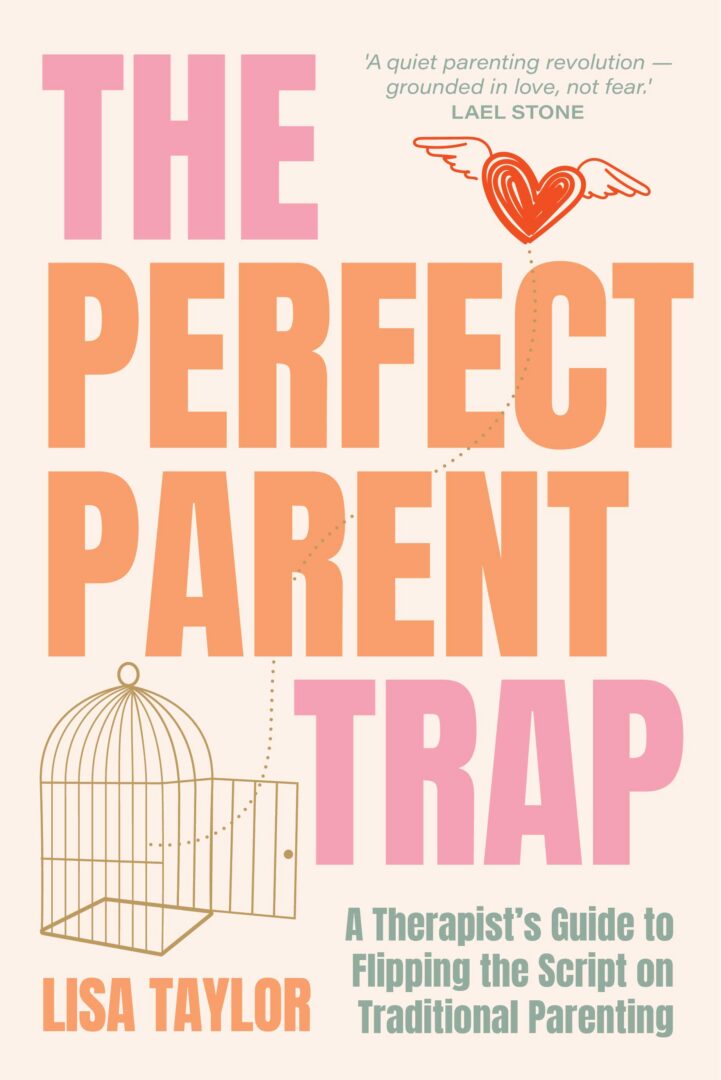 For parents wanting to explore these ideas further, more on building connection and understanding your reactions can be found in The Perfect Parent Trap by Lisa Taylor (Amba Press, $39.95). Lisa is a family therapist, relationships consultant, speaker and founder of Strengthening Families Australia.