23 Jul Why handwriting still matters for growing brains
As tablets, laptops and digital tools become a bigger part of school life, one simple classroom skill risks being pushed aside: handwriting.
But according to CQUniversity educational neuroscience expert Dr Ragnar Purje, handwriting is far more than a neatness exercise or an old-fashioned school habit. It plays an important role in helping children develop the brain connections they need for learning, memory, language and literacy.
“Handwriting is not optional,” says Dr Purje, an adjunct senior lecturer at CQUniversity and author of Responsibility Theory®.
“While typing may be faster and more convenient, decades of research show that handwriting activates the brain in ways technology cannot replicate.”
Why writing by hand helps children learn
When children write by hand, they are doing several things at once. They are using fine motor control to hold and move a pencil, visual processing to shape letters, memory to recall those letters, and language skills to connect sounds, words and meaning.
Dr Purje says this combination helps strengthen neural pathways that support learning.
“When children write by hand, they engage fine motor control, memory, visual processing and language systems simultaneously,” he says. “That creates stronger neural pathways for learning.”
Research has found that handwriting can generate more complex patterns of brain activity than typing. This does not mean technology has no place in the classroom, but it does suggest that children still benefit from learning to form letters by hand, particularly in the early years.
The importance of the tripod grip
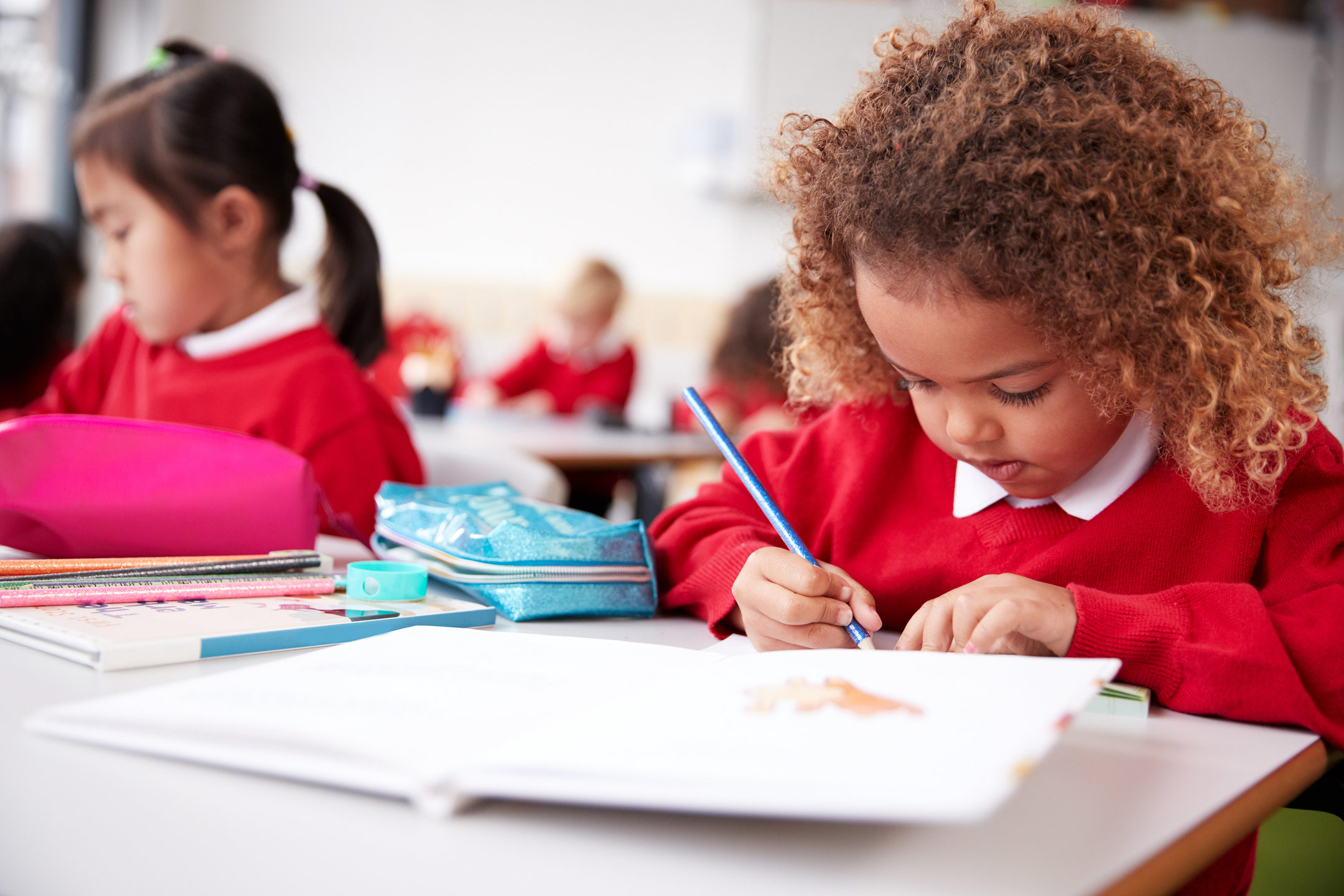
One of the early skills children are often taught is the tripod grip — holding a pencil with the thumb, index finger and middle finger. Many early-learning pencils are even designed with three sides to help children naturally find this position.
Dr Purje says this simple pencil hold is often underestimated.
“The tripod grip is one of the first pieces of educational neuroscience most children experience, even if teachers don’t describe it that way,” he says.
“Every time a child learns to hold and control a pencil correctly, they are strengthening the connections between movement, language, memory and thinking that support learning throughout life.”
For parents, it is worth remembering that children do not all develop pencil control at exactly the same pace. A comfortable, functional grip that allows a child to write without pain or fatigue is important. But helping children build hand strength, control and confidence with pencils, crayons and markers can support the foundations they need for writing.
Handwriting and early literacy
Handwriting can also help children recognise and remember letters. Forming a letter by hand gives the brain a different kind of experience from simply seeing it on a screen or pressing a key.
The movement involved in writing can help children understand letter shapes, spacing and patterns. Over time, this can support reading, spelling and written expression.
Dr Purje says schools should not view handwriting and technology as an either-or choice. Instead, handwriting should be seen as a foundation skill that children develop before digital tools become dominant.
“If we want children to develop strong cognitive foundations, handwriting must remain a core part of education,” he says.
What parents can do at home
Parents do not need to turn handwriting into another pressure point. Everyday activities can help children build the same skills in relaxed ways.
Drawing, colouring, tracing, making cards, writing shopping lists, labelling pictures, chalking on the footpath or writing notes to family members all help children practise hand control and letter formation.
For younger children, activities such as playdough, threading beads, using tongs, cutting with scissors and building with small blocks can also strengthen the small muscles in the hands and fingers.
The message is not that children should avoid keyboards. Digital skills matter too. But in the rush towards screens, experts say handwriting should not be treated as disposable.
As Dr Purje puts it, the real question is why schools would remove a practice that helps children learn, remember and think more effectively.
See also: 5 Reasons kids still need to learn handwriting
Is the art of writing becoming an extinct skill in a digital world